
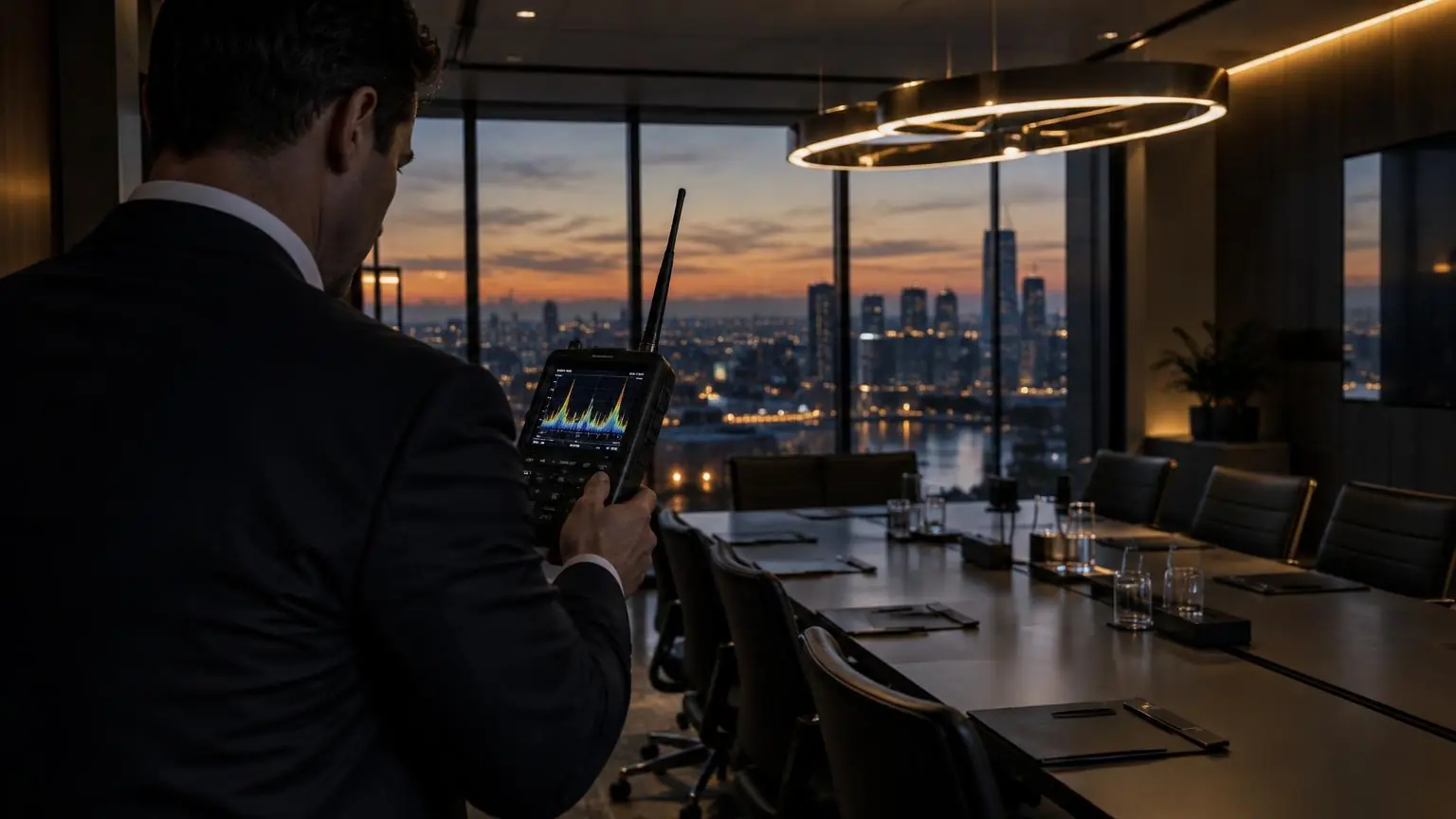
A professional bug sweep, also called a TSCM inspection, is a methodical search of a space, its phone and data lines, and sometimes its vehicles, for hidden listening devices, cameras, trackers and other surveillance equipment. Here is what happens from the first call to the final report.
1. A confidential first contact
If you think you are being monitored, contact a TSCM company from a phone, computer and place you trust, not from the room or device you are worried about. Avoid mentioning the sweep in the space itself. The first conversation covers what prompted your concern, the size and type of property, who has access, and any vehicles or phone lines to include.
2. Planning the scope
No two inspections are the same. A studio apartment, a full office floor, a hotel suite before a board meeting and a car are each planned differently. Scope determines which rooms, lines, vehicles and devices are inspected, how long the sweep takes and how it is priced.
3. A discreet arrival
Technicians arrive like ordinary visitors, at a time chosen so the people you are concerned about won't be present. In offices this is often after hours; in homes it is whenever you have privacy.
4. Electronic examination
Radio-frequency spectrum analysis
Spectrum analyzers look across radio frequencies for signals that don't belong, separating hidden transmitters from Wi-Fi, phones and other legitimate devices nearby.
Non-linear junction detection (NLJD)
An NLJD detects electronic components inside walls, furniture and objects, even when a device is switched off or only recording to memory.
Thermal imaging
Powered electronics give off heat. Thermal cameras can reveal devices concealed in walls, ceilings, outlets and furniture.
Telephone, line and network checks
Telephone lines, wiring and network cabling are examined where appropriate for taps, unusual connections and devices that shouldn't be there.
5. Physical search
Equipment alone is not enough. Technicians examine outlets, smoke detectors, light fixtures, vents, clocks, chargers, furniture, artwork and ceiling areas by hand and with inspection cameras, where hidden cameras and microphones are commonly concealed.
6. Vehicles, if included
Vehicle inspections cover the places GPS trackers and recorders are usually hidden: wheel wells, bumpers, the underside, the OBD port, under seats and in the trunk. See our vehicle bug sweeps.
7. Findings and next steps
You get a private briefing on what was found and practical steps to secure the space. A written report is available. If a device is found, it is documented in place. Depending on the situation, it may be best to preserve it and speak with an attorney or law enforcement before removing it.
Meeting rooms, hotels and conference spaces
For board meetings, negotiations and events, the sweep is timed as close to the meeting as possible, and the room is kept secure afterwards. Hotel suites and rented conference rooms are inspected before use because many people have had access to them. On-site monitoring during the event can be arranged in advance. See hotel and conference room sweeps and corporate bug sweeps.
Homes and apartments
Residential sweeps focus on bedrooms, living areas, home offices and anywhere private conversations happen, plus Wi-Fi and smart devices that may have been tampered with. See residential and apartment bug sweeps.
How to prepare for a bug sweep
- Don't discuss the sweep in the space or on devices you suspect
- Don't search, move or remove things yourself beforehand
- Note when your concern started and anything unusual you noticed
- List who has had access: staff, contractors, ex-partners, landlords
- Have keys and access ready for every room, closet and vehicle
How long does a bug sweep take?
It depends on the size of the space, the number of rooms, lines and vehicles, and the scope agreed in advance. We discuss timing during your consultation. To decide how often to repeat an inspection, read how often you should get a TSCM sweep.
This guide is general information, not legal advice.