
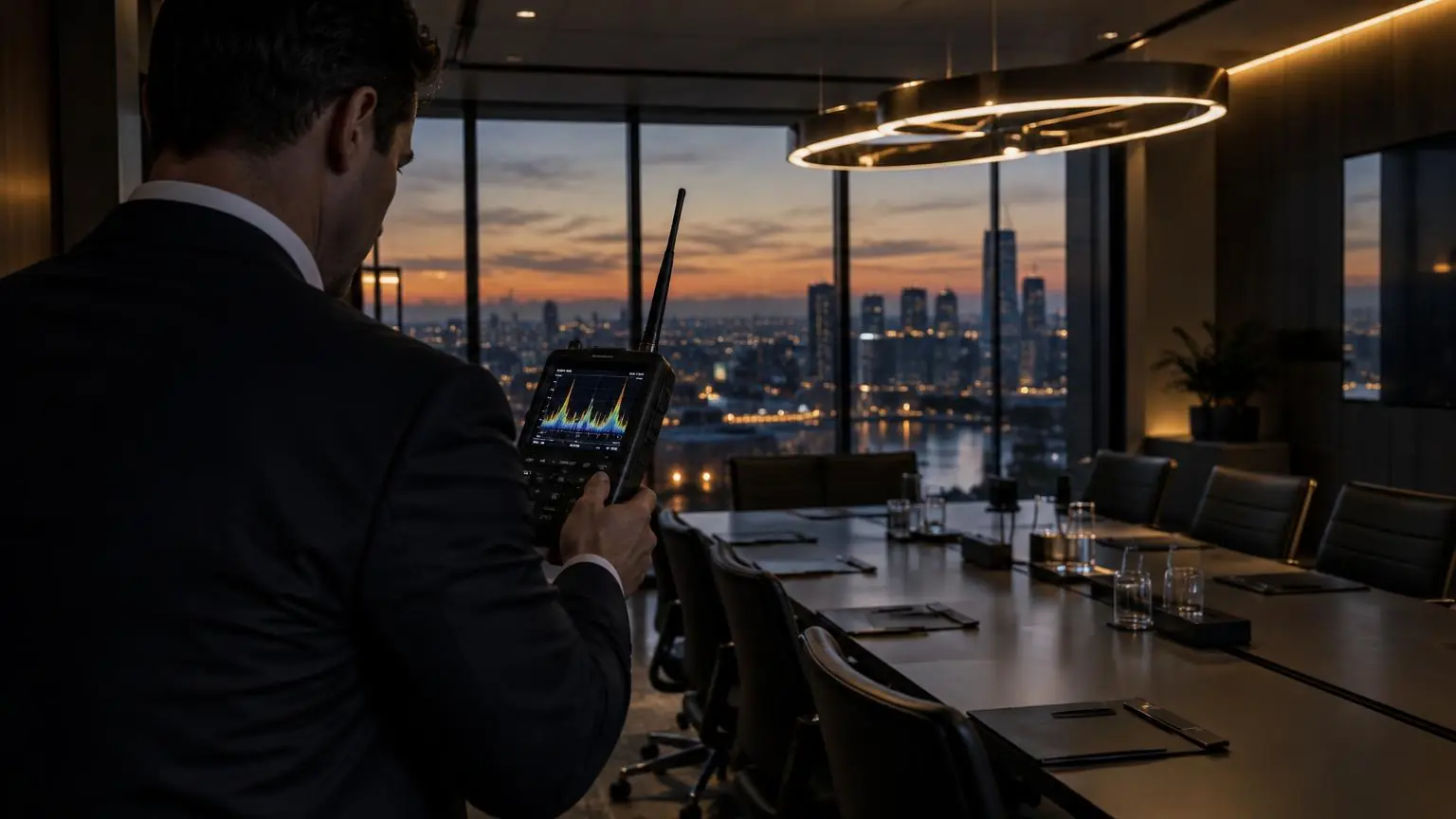
Hidden cameras are now small, cheap and easy to disguise. A few simple checks can catch obvious ones, but they have real limits. Here's what to look for and when to call a professional.
Where hidden cameras are usually placed
A camera needs a view of the area someone wants to watch, and usually power. That's why they are most often found in:
- Smoke detectors and air purifiers
- USB chargers and power adapters
- Alarm clocks, speakers and TVs
- Picture frames and wall decor
- Air vents and ceiling fixtures
- Tissue boxes, plants and books
- Bathroom fixtures and mirrors
- Desk items and pens
Simple checks you can do yourself
- Look at what faces the bed, shower and desk. Ask whether each object has a reason to be there and to point that way.
- Use a flashlight in a dark room. Slowly sweep the room; a camera lens can reflect a small, bright point of light.
- Check chargers and clocks. Look for a pinhole, a lens, or a device that feels heavier than it should.
- Look at the Wi-Fi network. Unfamiliar devices on a rental's network can be a clue, though many cameras record to a memory card instead.
- Read the listing rules. Major rental platforms restrict cameras inside rentals; report anything you find to the platform and, if appropriate, the police.
The limits of do-it-yourself checks
Phone apps and cheap detectors miss many devices. Cameras that record to memory don't transmit, so radio detectors can't find them, and pinhole lenses can be smaller than a pencil tip. A professional hidden camera detection sweep uses non-linear junction detection, thermal imaging, lens detection and a careful physical search to find powered-off and recording-only devices.
If you find a hidden camera
Don't touch or unplug it. Photograph it, leave the room if you feel unsafe, and contact the property, platform or law enforcement. If you need to know whether there are others, a professional sweep can check the whole space.
Hotel rooms and meeting spaces
Executives and legal teams often have hotel rooms and conference rooms swept before sensitive meetings. See hotel and conference room sweeps.
This guide is general information, not legal advice.