
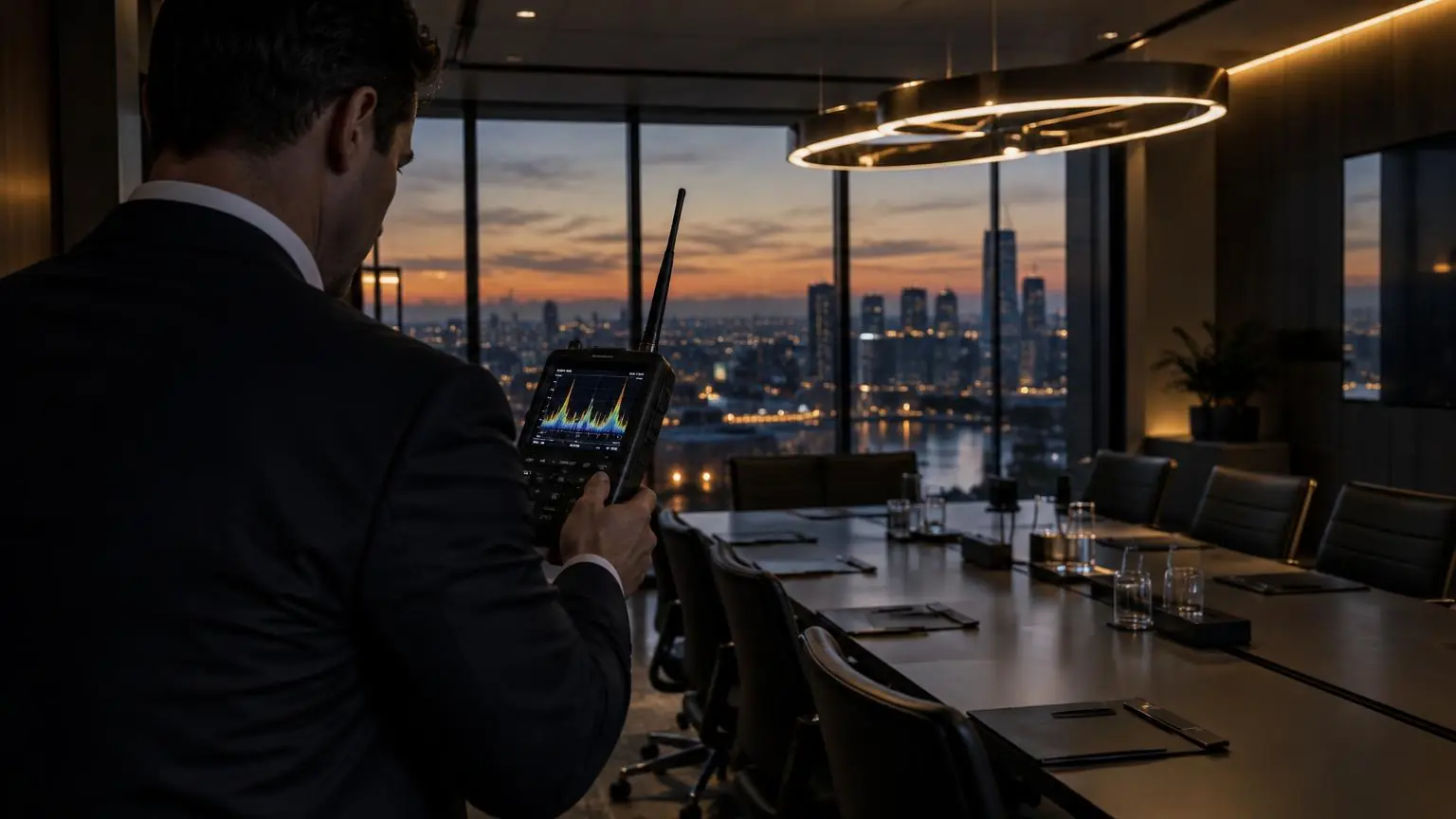
TSCM stands for technical surveillance countermeasures: the professional process of finding hidden listening devices, cameras, trackers and other surveillance equipment. It is often called a bug sweep.
What a TSCM bug sweep looks for
- Hidden microphones and audio transmitters
- Hidden cameras, including pinhole cameras
- Recorders that store to memory
- GPS trackers on vehicles
- Tampered phone and data lines
- Rogue wireless and Bluetooth devices
The equipment professionals use
Spectrum analysis
RF spectrum analyzers look across radio frequencies for signals that shouldn't be there, and help tell a hidden transmitter apart from ordinary Wi-Fi and phones.
Non-linear junction detection (NLJD)
An NLJD finds electronic components even when a device is switched off or recording without transmitting.
Thermal imaging
Electronics give off heat. A thermal camera can reveal a powered device hidden in a wall, ceiling or object.
Telephone and line analysis
Line analyzers check phone and data wiring for taps and modifications.
Physical search
No instrument replaces a careful, hands-on search of outlets, fixtures, furniture and objects.
How a sweep works
- Confidential consultation: you describe the concern and the space, and we recommend the right inspection.
- Discreet arrival at a time that suits you.
- Electronic and physical sweep of the rooms, vehicles or lines involved.
- Findings and report: we walk you through results and recommendations, with a written report available.
How to prepare
Don't discuss the sweep in the space you think is compromised, or by phone or email from a device you think is monitored. Arrange access to every room, vehicle and closet to be checked, and keep things as they are so nothing is disturbed.
Who uses TSCM services
Businesses protecting confidential discussions, executives, attorneys, families going through divorce or disputes, and anyone who thinks their privacy has been compromised. Explore our bug sweep services.
This guide is general information, not legal advice.